Architectural Walking Tours
Sunday, April 19, 2026, and Monday, April 20, 2026



Join us for two special architectural walking tours as part of the UConn Law Library Centennial.
We are commemorating the 1926 opening of the campus, which was originally built for the Hartford Seminary, now the Hartford International University for Religion and Peace. Co-hosted by the Architectural History and Resources Committee of the West End Civic Association (WECA), the architectural walking tours place the campus and the library within the broader historical context of their early twentieth-century origins and ongoing institutional life.
The evolution of the campus and the library's physical spaces reflects generations of civic collaboration and community investment. The tours are free and open to the public. Please join us in celebrating the campus's shared architectural heritage.
Tour Schedule
Monday, April 20 at 12:30 p.m.
A guided tour exploring the history, architecture, and institutional life of the campus.
-
David D. Grafton Professor of Islamic Studies and Christian-Muslim Relations, Hartford International University for Religion and Peace
-
Karla Grafton Director of Library Services, Hartford International University for Religion and Peace
-
John Rose Architectural History and Resources Committee Chair, West End Civic Association (WECA)
Tour Hosts

David D. Grafton
Professor of Islamic Studies and Christian-Muslim Relations,
Hartford International University for Religion and Peace
David D. Grafton
Professor of Islamic Studies and Christian-Muslim Relations, Hartford International University for Religion and Peace
The Rev. Dr. David D. Grafton is Professor of Islamic Studies and Christian-Muslim Relations on the faculty of the Duncan Black Macdonald Center for the Study of Islam and Christian-Muslim Relations at Hartford International University. The Duncan Black Macdonald Center is the oldest center of its kind in the United States. Dr. Grafton holds a PhD in Islamic Studies from the University of Birmingham, an MDiv from Luther Seminary, and a BA from Capital University.
Prior to his appointment at Hartford International University, Dr. Grafton served as Associate Professor of Islamic Studies and Christian Muslim Relations at the Lutheran Theological Seminary at Philadelphia and Director of Graduate Studies, Coordinator of Graduate Studies and Director of the Center for Middle East Christianity at the Evangelical Theological Seminary in Cairo, and adjunct lecturer in Islamic studies at the Dar Comboni Institute for Arabic and Islamic Studies in Cairo.
Dr. Grafton's academic interests focus on the history of Christian-Muslim relationships, Lutheranism and Islam, Christian theological perspectives on Islam, the history of Christianity in the Middle East, and American Christian perspectives of religion and society in the Middle East. His most recent publication is Muhammad in the Seminary: Protestant Teaching about Islam in the Nineteenth Century (New York University Press, 2024).
Dr. Grafton often speaks to community groups, congregations, mosques, and Islamic centers about interfaith dialogue and relationships, Islam, and Christian-Muslim relations. He is an ordained pastor of the Evangelical Lutheran Church in America.

Karla Grafton
Director of Library Services, Hartford International University
for Religion and Peace
Karla Grafton
Director of Library Services, Hartford International University for Religion and Peace
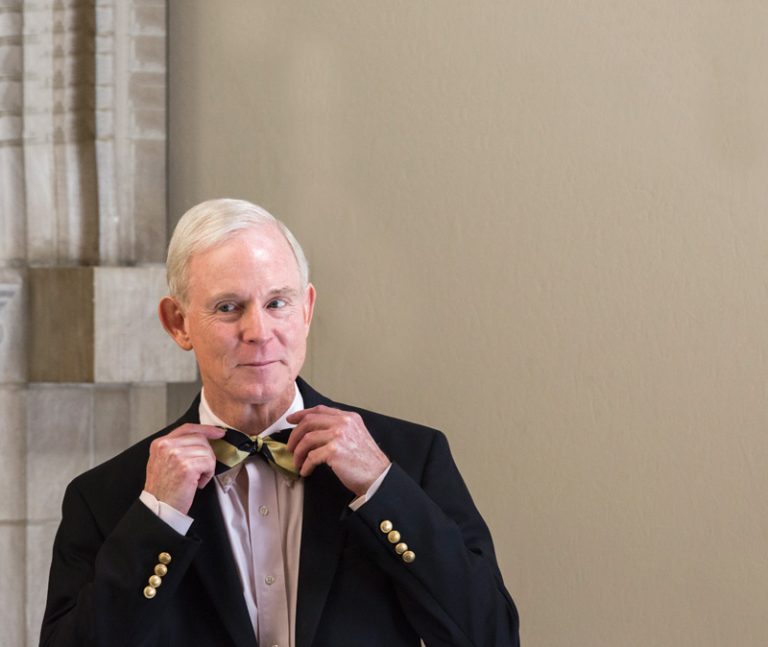
John Rose
Architectural History and Resources Committee Chair, West End Civic Association (WECA);
Emeritus College Organist and Director of Chapel Music Distinguished Chair, Trinity
College
John Rose
Architectural History and Resources Committee Chair, West End Civic Association (WECA); Emeritus College Organist and Director of Chapel Music Distinguished Chair, Trinity College
John Rose's teaching career at Trinity College spanned 40 years, during which he also maintained an international career as a concert and recording organist. In retirement he has served as chair of the West End Civic Association's Architectural History and Resources Committee.
Companion Guide
Architectural Walking Tour Companion Guide
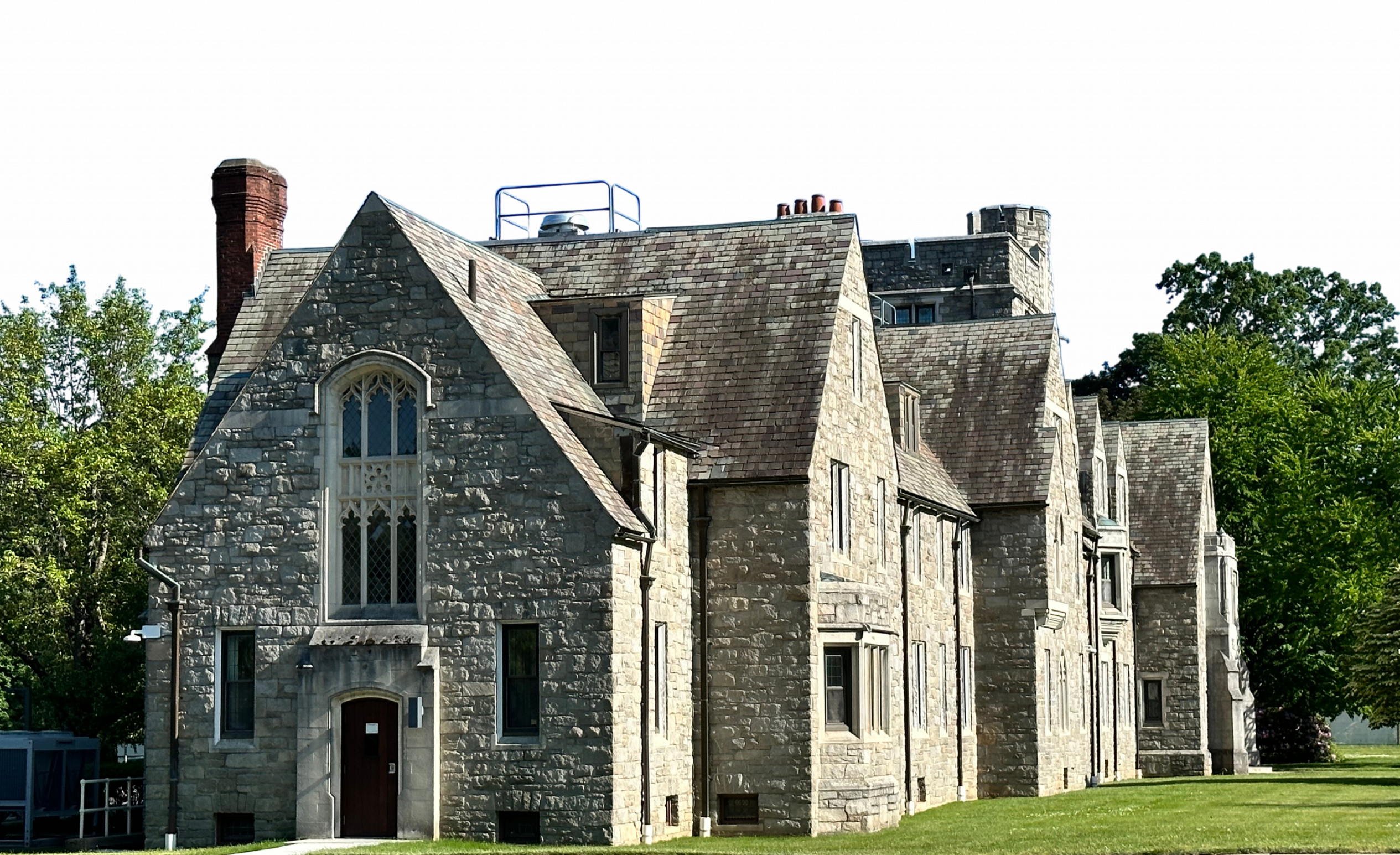
Speaking at the dedication of the campus and its new buildings in 1927, Hartford Seminary Foundation President Dr. William Douglas Mackenzie stated:
" When the turf was cut for the first building, the Residence Hall for Women, in June 1921, only a small part of the money for that building was in sight. But by gifts from a very large number of people, almost all of them citizens of Hartford and its neighborhood, the whole cost of it, amounting to more than two hundred thousand dollars, has been paid.
A New Campus for a Growing Institution
The foundations of Hartford International University for Religion and Peace date to 1834, when the Theological Institute of Connecticut was established in East Windsor to prepare young men for the ministry. In 1865 the Institute moved to Hartford, first to Prospect Street and then to Broad Street in 1879. By 1913 it had joined with the School of Religious Education of Springfield and the Kennedy School of Missions. A new and larger campus was needed to accommodate the affiliation of several institutions under the banner of the Hartford Seminary Foundation.
A parcel of land measuring approximately 30 acres in Hartford's West End, abutting the North Branch of the Park River, was purchased from James J. Goodwin. The architect Charles Collens (1873-1956), a graduate of Yale University and the Ecole des Beaux-Arts in Paris, was selected to design the new campus. Collens described the plan as Collegiate Gothic in Buckingham granite on rubble ashlar with leaded glass windows. Construction of five of the six planned buildings began in 1921, and the campus and buildings were dedicated on May 17 and 18, 1927.
The full concept of a north-facing open quadrangle was never entirely realized, and Hartford Seminary moved from the campus in the 1970s to its current building in 1981. The campus now houses the University of Connecticut School of Law.
This guide was written as a companion to a walking tour of the original six buildings of the Collens plan, but it would be incomplete without mentioning the modern structure at the center of the present campus. Completed in 1996, the five-story, 120,000 square-foot Thomas J. Meskill Law Library is one of the largest law libraries in the country. Designed to be compatible with and sensitive to the original Collegiate Gothic buildings of the 1920s, even the granite facade was cut from the same quarry as those on the original buildings.
Historical Precedent
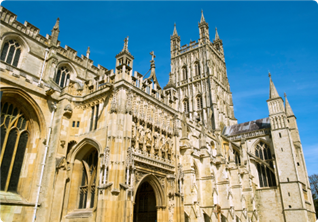
Practiced in Europe from the mid-twelfth to the sixteenth century, Gothic architecture made possible tall and massive structures with pointed arches and large windows. Tracery admitted as much natural light as possible. Evolving styles throughout this period include Saint-Denis and Chartres Cathedral in France, Gloucester Cathedral in England, Segovia Cathedral in Spain, and Frankfurt Blackfriars in Germany, to name only a fraction of the most significant examples.
 1820-1860
English Perpendicular
Former St. John's Episcopal Church, Hartford, 1841
Horizontal with one major tower or spire.
 1860-1890
High Victorian
Trinity College Long Walk, Northam Tower, Hartford, 1883
Eclectic combinations of styles and details.
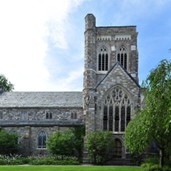 1900-1940
English Vernacular
St. Michael's Church, Litchfield, 1921
A return to English influence with superb craftsmanship.
Leading Gothic Revival Architects

Ithiel Towne
Christ Church Cathedral (1827)
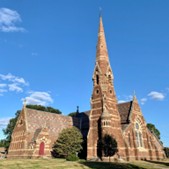
Edward Tuckerman Potter
Church of the Good Shepherd (1869)

Ralph Adams Cram
Nativity Chapel, Christ Church Cathedral (1907)
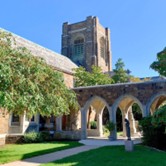
Bertram Grosvenor Goodhue
St. John's Episcopal Church, West Hartford (1909)

Charles Collens
Gross Chapel, Asylum Hill Congregational Church (1939)
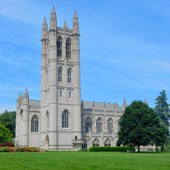
Philip H. Frohman
Trinity College Chapel (1932)
Campus Map
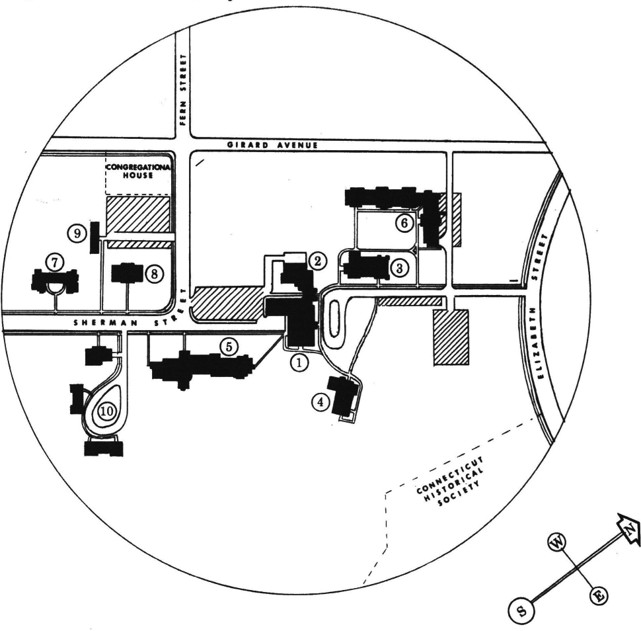
Map representing the campus of the Hartford Seminary Foundation. Numbers 1 through 6 are detailed below. Numbers 7 through 9 were later demolished to make room for the 1981 building by architect Richard Meier, which now houses Hartford International University for Religion and Peace. Number 10 marks the faculty housing loop.
The Original Buildings

Avery Hall
Housing the Case Memorial Library and, temporarily, the Kennedy School of Missions.
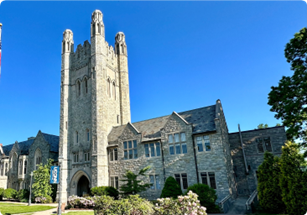
Gillett Hall
Connected to Avery Hall and dedicated in 1955 to complete the original campus complex.

Hartranft Hall
Constructed for use by the Theological Seminary and as a chapel for all schools.

Knight Hall
Opened in 1926 as classrooms and offices for the School of Religious Education.
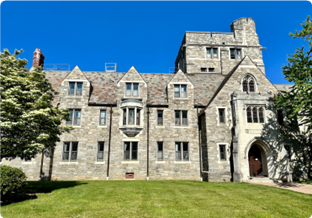
Mackenzie Hall
Construction began in 1921 and the building opened in 1924 as the women's student dormitory.

Hosmer Hall
Constructed for the men's student dormitory and refectory at the rear of the building facing Girard Avenue.
Architectural Glossary
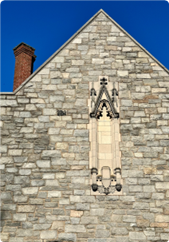
Ashlar
The finest stone masonry unit, finely hewn or squared stone that can be dressed for a wall face of rubble or brick.
Buckingham Granite
An engagement announcement in the Glastonbury column of the Hartford Times in 1928 noted that the groom was employed by the Buckingham Granite Quarry. Buckingham was a subsection of Glastonbury, most likely the Carline Quarry, which produced granite gneiss.
Corbel
A structural piece of stone protruding from a wall to carry specific weight.
Crenel
The space between two merlons.
Crenellation
Any of the embrasures alternating with merlons in a battlement.
Embrasure
An opening with sides flaring outward in a wall or parapet of a fortification, usually for allowing the firing of cannon.
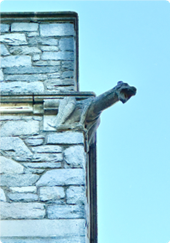
Gargoyle
A spout in the form of a grotesque human or animal figure projecting from a roof gutter to throw rainwater clear of a building.
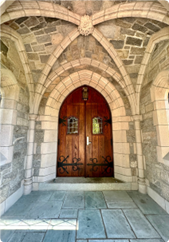
Gothic Arch
Also called a pointed arch or ogival arch, a Gothic arch has a pointed crown, with two curving sides meeting at a relatively sharp angle pointed upward at the top of the arch.
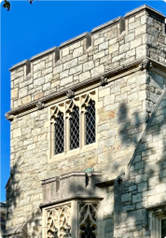
Grotesque
A style of decorative art characterized by fanciful or fantastic human and animal forms often interwoven with foliage or similar figures that may distort the natural into absurdity, ugliness, or caricature.
Merlon
The solid upright section of a battlement, sometimes pierced by narrow vertical embrasures in a crenellated parapet.
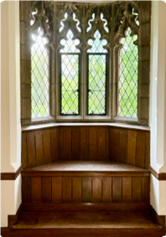
Oriel Window
A window or set of windows arranged in a bay that protrudes from an upper floor and is braced by a bracket or corbel, allowing light to enter from multiple directions.
Parapet
A low protective wall along the edge of a roof.
Quatrefoils
A shielded, flower-like rounded shape typical in Islamic and African architecture.
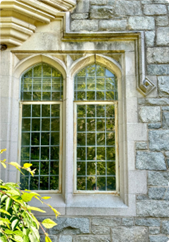
Quoining
Masonry blocks at the corner of a wall that may provide strength to a wall of inferior stone or add aesthetic detail suggesting permanence.
Rubble
Pieces of rough or undressed stone used in building walls, especially for filling cavities.
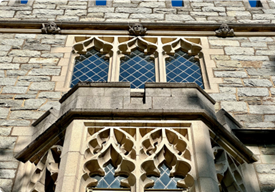
Tracery
Ornamental stonework separating glass in windows.
Sources and Credits
- Dedication of Buildings and Campus of the Hartford Seminary Foundation (1834-1927), May 17 and 18, 1927
- Geer's Hartford and East Hartford Directory, 1904
- National Register of Historic Places Inventory nomination form completed by David F. Ransom for the Hartford Architectural Conservancy
- Hartford Architecture, Volume Three: North and West Neighborhoods, Hartford Architecture Conservancy Survey, 1980
- The Hartford Seminary of Tomorrow, The Hartford Theological Seminary, 1913
- History of Hartford County Connecticut 1633-1928, Volumes I and II, Charles W. Burpee
- "Starr Hall: Some History and Architectural Oddities," Pro Se, The Official Student Newspaper for the University of Connecticut School of Law, Jaime Welsh, December 12, 2014
- Structures and Styles Guided Tours of Hartford, Gregory E. Andrews and David F. Ransom, The Connecticut Historical Society, 1988
- UConn Law School Existing Facilities Condition Report, January 2000
- Thanks to the late Marie Rovero, acquisitions and cataloging, Hartford International University for Religion and Peace, for research assistance and documents
Acknowledgements
This content was reformatted from a booklet prepared for the walking tours hosted by the Architectural History and Resources Committee of the West End Civic Association, Hartford International University, and UConn School of Law on April 19 and 20, 2026. Thank you to the following individuals and organizations for their assistance in facilitating the walking tours:
University of Connecticut School of Law:
- Eboni S. Nelson, Dean and Professor of Law
- Christina Mohr, Assistant Dean of Finance and Administration
- Jessica Panella, Library, Head of Outreach & Community Engagement
- Polya Tocheva, Library, Collections Specialist
Tour Hosts:
- David D. Grafton, Professor of Islamic Studies and Christian-Muslim Relations, Hartford International University for Religion and Peace
- Karla Grafton, Director of Library Services, Hartford International University for Religion and Peace
- John Rose, Architectural History and Resources Committee Chair, WECA, and Emeritus College Organist and Director of Chapel Music Distinguished Chair, Trinity College
Booklet Prepared By:
- John Rose, Architectural History and Resources Committee Chair, WECA, and Emeritus College Organist and Director of Chapel Music Distinguished Chair, Trinity College
- Matthew Larson, Vice President, South, WECA