The Pocket Part Blog

Meet the new Westlaw, same as the old Westlaw?

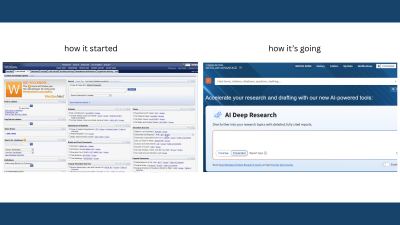
contrast of westlaw homepages from 2000 to 2026


As the semester has gotten underway, and you’ve logged into Westlaw, you may have noticed that things look very different.  There has been a lot of handwringing about how the new platform design centers its artificial intelligence to do legal research on your behalf.  Rightfully so?  That’s more complicated than it seems at first glance and deserves some in-depth consideration.  Why has Westlaw made this choice?  One that seems to upset legal research experts so much?  It’s worth looking at the history of the company and what guided similar changes in the past to glean some insight.     

John B. West, and his West Publishing Company (founded with brother Horatio) began publishing The Syllabi in 1876.  It was originally a weekly news sheet that reported on cases decided in the Minnesota courts.  The unmet need was timely information about developments in the law, as publication of the opinions took much longer otherwise.  It was wildly successful and their efforts soon expanded into Wisconsin and the product was renamed The Northwestern Reporter.  This is what eventually developed into the West National Reporter system as we now know it.   

But there was a problem.  That’s suddenly a whole lot of case law to digest (no pun intended).  How do you find the opinions relevant for your case?  The West American Digest System was the key (no pun intended) that unlocked the puzzle.  Each case was evaluated by an attorney-editor, who summarized the points of law present.  These are the headnotes you see at the beginning of a West published opinion and still see on the database today.  Those headnotes are then assigned a topic and key and arranged accordingly in a multi-volume set of books called Digests.  In this way, you had a subject index of sorts to find specific points of law and you still do!   

And that was how research was done for close to a century.  Until the advent of … dun dun duuunnn … the computer.   While Lexis was founded as the first company to get the law up and running on a terminal, Westlaw was hot on their heels.  Law schools in 1990 first began giving students codes to create their own accounts and access the database on their own machines.  And having the text of the law electronically available naturally opened up new ways of finding legal materials.   But in the early days of these databases, the information was rigidly organized and to run searches you had to know how to communicate to the database exactly what you wanted using everybody’s favorite, Boolean Terms & Connectors.  So, while the law was more directly available than ever before, you still had to know how things were organized and anticipate the kind of language you hoped to find, and craft your search accordingly.  Also, again, still can to this day! 

This started to change when I first went to law school with the launch of Westlaw Next.  I was warned by my librarians at the time not to rely too heavily on the new interface because I might become addicted and my research skills would suffer as a result.  Sound familiar?  What exactly was on offer with Next that could potentially corrupt my future in the law?  This is when Westlaw made the switch from making users make explicit choices about where and how to search, to putting a giant search bar at the top and telling them to give it a go with natural language searching.  What had changed in the information environment that made Westlaw think this was the future?  In the early 2000s, Google had become so popular that instead of searching the web, we started to refer to it as Googling.  User expectations had shifted. 

I find it ironic that here we are at a moment in history in which Google itself is threatened by the rise of generative AI and shifting its business models accordingly.  Westlaw is simply following suit.  While they have employed AI for years to power its relevancy ranking and who knows what else in the background, it has slowly but surely been releasing new AI forward products since ChatGPT came on the scene.  Which lands us smack dab at the beginning of the semester and a new homepage that now loads with AI Deep Research front and center.  Westlaw is betting that user expectations have shifted once again and wants to be the product that meets the need.   

But does AI Deep Research actually meet the need?  That’s the subject of a much longer blog, but I’ll just share from my own experience, I never got addicted to what Next offered because it was simply an additional tool to take advantage of on the database.  I knew then, and still teach to this day, that all the major developments noted here are still available to us on Westlaw as it exists now, as you’ve already seen me highlight over and over again.  Let’s hope that’s the message that sticks.  Unfortunately, Westlaw has just made it much harder to find how to do so.  At the end of the day, that’s my real beef.  Not with AI itself, but making the full range of search possibilities harder to discover, because you should never be relying on a single technique to get the job done.  If you need help navigating this new landscape, set up a 1-on-1 with the reference team from our homepage, library.law.uconn.edu, and we’ll be glad to show you the history of Westlaw in action from the convenience of your laptop. 

Please Welcome the Library’s Newest 1Ls

Welcome to a new academic year at the UConn School of Law!

Whether you’re returning or arriving on campus for the first time, we’re excited to see you.  The start of the semester is one of our favorite times of the year in the Law Library.  Familiar faces return, new faces appear, and the building starts to feel like a community again.  Of course, you incoming students aren’t the only newcomers around here…

While you were away, we welcomed several new resources to the Law Library in preparation for your arrival.  And since we know that getting to know a whole new class of people can be a little overwhelming, we thought we’d help with the introductions.

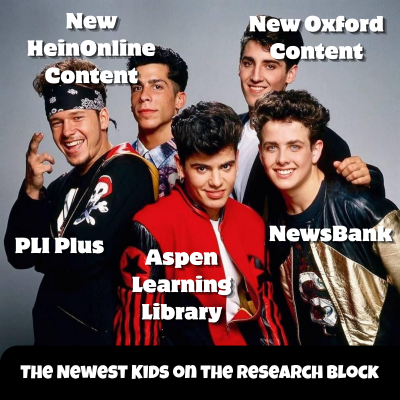
So, please meet some of our newest library “1Ls”:

Aspen Learning Library

First up is Aspen.  Aspen is the classmate you want to sit next to when a concept just isn’t clicking.  They’ve read the material already, have a different way of explaining it, and aren’t going to judge you for asking, “Wait, what does that actually mean?”

The Aspen Learning Library gives you access to Aspen’s collection of study aids; including classic titles like E&Es, Emanuel’s, Glannon’s, and more; which can help you review legal concepts, prepare for class, and approach difficult subjects from another angle.

PLI Plus

Then there’s PLI.  PLI is already thinking about practice.  While the rest of us are still trying to figure out where the classroom is, PLI is wondering what you’re going to do with all this legal knowledge once you graduate.  Maybe cause a little trouble, who knows, let’s hope it’s the good kind.

PLI Plus provides access to Practising Law Institute’s collection including practitioner-written treatises and practice guides, forms and checklists, and materials from PLI’s continuing legal education programs.

NewsBank

Every law school class has someone who seems to know what’s happening in the world.  That’s NewsBank.  The NewsBank World News Research Collection provides access to news coverage from around the world, making it useful when your research requires more than statutes and cases and you need to understand what actually happened on the ground.

Max Planck

Max Planck is the serious one.  You know exactly who I mean.  They may or may not smoke a pipe. They have somehow already read 400 pages, have strong opinions about comparative constitutional law, and can explain the constitutional structure of a country you’ve never even heard of.  We’ve added the Max Planck Encyclopedia of Comparative Constitutional Law and the Max Planck Encyclopedia of Public International Law to help with exactly those kinds of questions.

And the rest of the class…

We’ve also welcomed new resources from Elgar, Oxford Handbooks Online, and HeinOnline, covering everything from intellectual property and comparative law to international organizations and state commitments with foreign governments. Certainly no slouches either!

All of these resources may not be the ones you need to meet during orientation, but you’ll be glad to know that they are around when the right research question comes along.  And, of course, the Library’s old friends are still here, too. Blackstone is a 100L+ at this point.

So welcome back.  And to our incoming students, welcome to UConn Law!  We’re very glad you’re here.  We hope you’ll get to know your classmates, your professors, your Library and eventually, some of these newest members of the research community.

And if you’re ever not sure who you should be talking to, there’s always a librarian nearby who can help with the introductions!  On all fronts!!

Motion to Celebrate: Granted. Congratulations, Bar Takers!

Congratulations to all of our bar takers on getting through the grueling gauntlet of two days of test taking!  Along with those in Maryland, Missouri, Idaho, Oregon, Washington, Guam, Northern Mariana Islands, Palau, and the Virgin Islands, you will forever be able to say that I was one of the first to take the NextGen Bar.   Guinea pigs, we salute you!!

We’ve come a long way from the first bar examination administered orally in Delaware County in 1783.  And you have the American Bar Association to thank for the near extinction of diploma privilege for law school graduates.  (Keep fighting the good fight Wisconsin…) Just be glad you didn’t go to one of the law schools in Japan that literally had zero students pass that country’s test one year.  I also take back what I said earlier about Washington because things didn’t go as planned…  Exam currently rescheduled for September 1-2.

However things turn out for you in life, whether you pass or not, is impossible to say, so enjoy as much time as you’re able to for yourself before turning to the next thing whatever it may be, you’ve earned it!!!  And don’t be strangers here at the library even though you’ve graduated, we can still be a valuable resource for you as you head out into the wider world of law.  Best of luck.

How the Library Saved My Life

As I prepare to leave law librarianship, I keep returning to one realization: the library changed—and ultimately saved—my life.

As a child, I was dyslexic, off the chart hyperactive, and so unable to self-regulate that I was expelled from multiple schools. Ritalin, touted in the 1970s as a miracle drug, was offered as a solution to my exhausted parents. It subdued my hyperactivity enough that I could make it through the school day, though it did little to address the challenges I faced as a learner. Unable to read until third grade, academic and social struggles led to such relentless bullying and rejection that I eventually tried to run away.

There was, however, one place where I didn’t feel judged: the library.

Librarians encouraged me, helped me become a reader, and gave me a sense of safety. The library became a place of hope and healing. I’ve since realized libraries offer that same refuge, possibility, and human connection to many whose stories often go unseen.

Years later, that refuge became my calling.

My first library job was at Hartford Public Library at The American Place. There, I met people whose struggles far exceeded my own: adults learning to read after missed opportunities in childhood, parents navigating technology just to support incarcerated children, the Digital Divide, patrons facing mental illness, loneliness, and housing insecurity.

In Hartford Public Library’s Immigration Program, I witnessed extraordinary resilience.  I met women who had survived unimaginable violence. I met the Bosnian couple who had lost their spouses and children in the war and found each other in a Refugee camp, giving them a second chance at happiness.

I met a Polish widow who continued attending ESL classes even after mastering English, because her fellow students had become her only source of companionship, and a man from Brazil with Alzheimer’s who cried when he was granted the disability waiver and awarded U.S. Citizenship. 

I celebrated with a pre-literate woman from Ghana who passed the writing portion of the citizenship exam through determination and the help of volunteer tutors. Their stories reminded me that libraries are places of dignity, hope, and belonging.

In serving others, I began to heal. Over time, I came to see my learning disability not as something to hide, but as part of the person I had become and a call to help others. It feels especially meaningful to reflect on that journey during Disability Pride Month, which reminds us that our differences are not barriers to belonging—they are part of who we are.

I arrived to UConn Law Library with enthusiasm and a deep belief in the mission of libraries, but not yet the confidence nor skills to succeed.  In law school and the workforce, I worked hard to hide my disability,  compensating, and afraid to disclose it for fear of judgment. 

My intelligent, generous and patient law library colleagues shared their knowledge and skills.  I saw that eccentricities and challenges could be celebrated, rather than disparaged. What I viewed as shortcomings could also be strengths.  I learned from them, and together, we supported students and public patrons who need an ear to listen to, to feel accepted and belonged. 

Libraries taught me that every person deserves a place where they are welcomed. I carry profound gratitude for the colleagues, mentors, patrons, and libraries that saved me.

Libraries save lives every day. Mine just happens to be one of them.

I can only hope that, in some small way, I have helped libraries do the same for others.

Juneteenth: Recognizing Freedom and Equality

Juneteenth, also known as Freedom Day or Emancipation Day, is the oldest known celebration commemorating the end of slavery in the United States. While the Emancipation Proclamation became effective on January 1, 1863, the news took time to make its way around the country. As such, it was not until June 19, 1865, when the Union army brought word of the proclamation to enslaved people in Galveston, Texas, making them among the last to be freed, thus Juneteenth commemorates the day in 1865 when federal troops arrived in Galveston, Texas to take control of the state and ensure that all enslaved people be freed.

On February 25, 2021, H.R. 1320 and S. 475 were both introduced to establish Juneteenth as a federal holiday. S. 475 was signed into law on June 17, 2021 and Juneteenth National Independence Day became a Federal holiday. In June 2026, the vast majority of these states (30 plus D.C.), Juneteenth is a permanent holiday by law and commemorated annually, according to records compiled by the Congressional Research Service. At least 33 states have designated Juneteenth as a legal holiday.

Juneteenth became a legal state holiday in Connecticut through Public Act 22-128, which Governor Lamont signed into law in 2022. It requires every June 19 to be observed as Juneteenth Independence Day beginning in 2023. If June 19 falls on a Saturday, the legal state holiday will be on the prior Friday, and if it falls on a Sunday, the legal state holiday will be on the following Monday.

Governor Ned Lamont noted the significance of Juneteenth his press release of June 14, 2023:

For far too long, Juneteenth and the end of slavery have not been truly appreciated as a major part of United States history to the extent that they should…embracing this history is an important component of educating everyone about how our nation was built and the significance of what this day means. When we ignore the impact of slavery, we ignore who we are as Americans and the extraordinary injustice that it created. Making Juneteenth a legal state holiday does not erase the cruelty of slavery, however it makes it clear that Connecticut acknowledges this gross injustice in our collective history and recognizes its impact.

HeinOnline’s database Slavery in America and the World: History, Culture and Law is available through the UConn Law Library.  This database brings together all known legal materials on slavery in the United States and the English-speaking world. Read more about this database in the HeinOnline Blog.

Learn more about Juneteenth with the following sources:

UConn Law Library will be open on Juneteenth from 9-5. You can check out which offices are closed  in Connecticut on Juneteenth as well as Juneteenth celebrations across our Nutmeg state.

Juneteenth stands as a testament to the resilience and determination of the African American community in the face of oppression and injustice. Its significance underscores the enduring struggle for freedom and equality in America. As we commemorate Juneteenth, let us not only celebrate how far we’ve come but also recommit ourselves to the ongoing pursuit of justice and equality for all.

Celebrating Diversity: Pride Month 2026 at UConn Law Library

June is LGBTQI+ (Lesbian, Gay, Bisexual, Transgender, Queer, and Intersex) Pride Month! Originally celebrated as Gay Pride Day on the last Sunday in June to commemorate the 1969 Stonewall Uprising in New York City, Pride Month gradually became a month-long event.

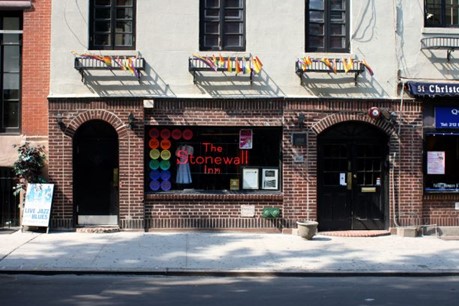
The Stonewall site was declared a National Monument by Presidential Proclamation. The Stonewall uprising is regarded by many as the most important catalyst for the dramatic expansion of the movement to outlaw discriminatory laws and practices against LGBTQI+ Americans.

Stonewall Inn Johannes Jordan/Wikimedia Commons

Today, LGBTQ Pride Month events attract millions of participants around the world and has grown to a month-long series of events such as parades, picnics, parties and concerts, including some great events to check out right here in Connecticut:  https://ctvisit.com/articles/pride-month-celebrations

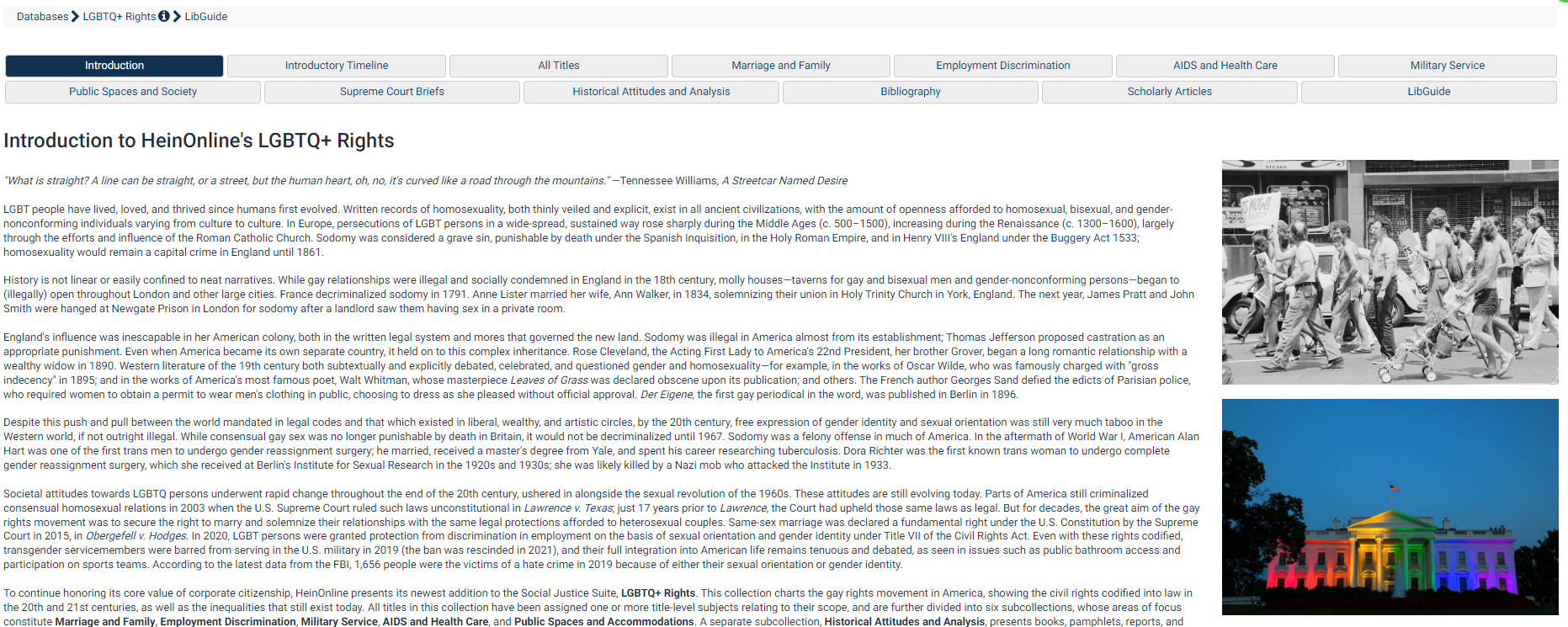
Many legal changes for the LGBTQI+ community have been made since the police raided the Stonewall Inn nearly fifty years ago. However, continuing LGBTQ+ civil and equality rights issues remain relevant today.  HeinOnline features a LGBTQ+ Rights database.  This collection charts the gay rights movement in America, showing the civil rights codified into law in the 20th and 21st centuries, as well as the inequalities that still exist today.  To learn more about the newest database check out HeinOnline’s blog here and for additional research, check out UConn Law’s Research Guide, Sexuality, Gender Identity and the Law.

Behind the Scenes at the Law Library: Paws, People, and Summer Support

Summer at UConn Law Library sees graduates preparing for the bar exam and students beginning internships, many students are managing significant demands all at once.

But no one succeeds entirely on their own. Whether students need a study space, research assistance or support, librarians are here for them throughout the summer.

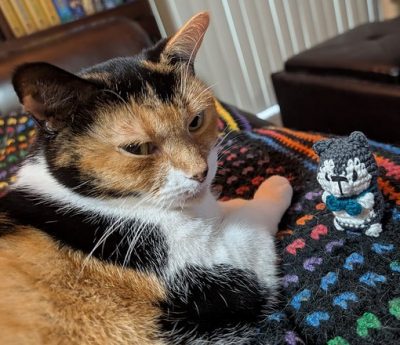
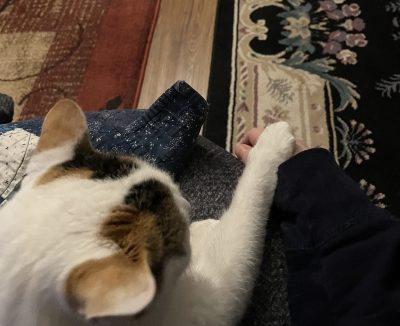
Our pets are our “support squad” that help remind us of the importance of patience, routine, and care along the way.  Some are highly skilled at interrupting Zoom meetings or sitting directly on important papers. But all contribute to the sense of connection and balance that can be difficult to maintain during stressful periods.

In fact, the library pets seem uniquely qualified to give summer survival advice:

Cassie
Human: Anne Rajotte, Associate Director of Research, Instruction, and Scholarship
  • Take a walk (or a zoomie break) when your brain needs it.
  • Keep a routine — the cats are onto something.
  • Never underestimate a strategic nap.
  • Touch grass occasionally. Literally.
  • Ask for support when you need it; even cats meow for attention.
  • Reward yourself after hard things. Treats work on humans too.

So this summer, we’re introducing some of the behind-the-scenes members of the law library team: the pets who keep librarians company while we support our students all summer long.

Meet the UConn Law Library Support Squad

Boots and Bobo
Human: Susanna French, Metadata and E-Resource Management Librarian
Kali
Human: Tanya Johnson, Instructional Services Coordinator & Research Librarian
Nyx
Human: Faye Bates, Technical Services Librarian
Fun Fact: Nyx helps make sure gravity is still working by periodically knocking items off counters.
Blip
Human: Tanya Johnson, Instructional Services Coordinator & Research Librarian
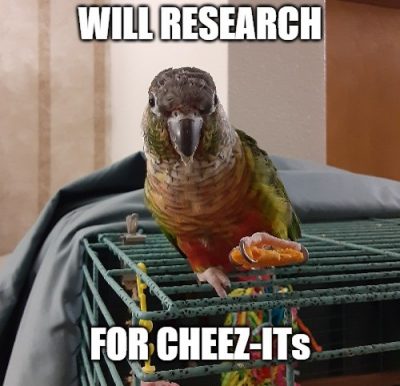
Fun Fact: Blip is a green-cheeked conure who loves helping Tanya make videos for her classes
Gabby
Human: Elisabeth Umpleby, Associate Director of Collections, Discovery, and Systems
Romeo
Human: Anne Rajotte, Associate Director of Research, Instruction, and Scholarship
Pato
Human: Adam Mackie, Research and Instructional Services Librarian
Fun Fact: Pato is an Emotional Support Rubber Ducky “My Main Squeeze”
Georgie
Human: Maryanne Daly-Doran, Digital Services Research & Instruction Librarian
Fun Fact: Georgie attends every virtual meeting, whether invited or not.

The law library’s “Summer Support Squad”may be furry, feathered, four-legged, or even plastic, but they play an important role in reminding all of us about something easy to forget during bar prep and summer internships: support matters.

To everyone studying, working, interning, or preparing for the bar this summer: the law library is cheering you on. Whether your support system includes classmates, coworkers, family, friends, librarians, pets, or all of the above, remember that you do not have to get through this season alone.

We’re here to help — and our pets are rooting for you, too.

Summer & Post-Graduate Access to Bloomberg, Lexis & Westlaw: What You Need to Know

Summer is upon us!  Whether you are preparing for a summer internship or post-graduate plans, there are online resources available to you.  Here’s what you need to know about access to Bloomberg Law, Lexis Nexis, Westlaw and library databases. Need a dose of research help?  Research & Instruction librarians are available  throughout the summer to assist with job or internship questions!

 Logo of Lexis Nexis

Lexis

Returning Students

Lexis access continues through the summer with no restrictions on time or usage.

Graduates

Graduate Gift: The Graduate Portal has been updated to reflect the new Graduate Gift Program. Graduates must enroll using the new, program-specific Insider link to activate their Lexis+ AI access with their graduate ID. Once signed up, the process of adding Lexis+ with Protege to their IDs is a manual process that will be completed within two weeks of them filling out the form. LexisNexis Insider 

Aspire Program

The LexisNexis ASPIRE Program provides 12 months of free access to federal and state cases, codes, regulations, law reviews, Shepard’s® Citation Service, and Matthew Bender® treatises to graduates who are engaged in verifiable 501(c)(3) public interest work.

 Westlaw Logo

           Westlaw

Returning Students

You can use Thomson Reuters products, including Westlaw®, Practical Law, and CoCounsel over the summer for non-commercial research. You can turn to these resources to gain understanding and build confidence in your research skills, but you cannot use them in situations where you are billing a client. Examples of permissible uses for your academic password include the following:

  •  Summer coursework
  • Research assistant assignments
  • Law Review or Journal research
  • Moot Court research
  • Non-Profit work
  • Clinical work
  • Externship sponsored by the school

You do not have to do anything to gain access to these tools over the summer. If you have any questions, please contact your Thomson Reuters Academic Account Manager.

Graduates

You can use Thomson Reuters products, including Westlaw, CoCounsel and Practical Law, for 6-months after graduation. Your “Grad Elite” access gives you 60-hours of usage per month to gain understanding and build confidence in your research skills. While you cannot use it in situations where you are billing a client, Thomson Reuters encourages you to use these tools to build your knowledge of the law and prepare for your bar exam.

YOU MUST OPT IN TO GRAD ELITE Access:
1) Go to www.lawschool.tr.com; Log in; Use the drop-down menu by your name to go to Grad Elite Status
2) Or Click on this link: https://lawschool.westlaw.com/authentication/gradelite


Bloomberg Law Logo

Bloomberg Law

Returning Students

Bloomberg access continues through the summer, this access is automatic (no registration required) and is unlimited and unrestricted.

Graduates 

2026 graduates have continuous access for six months following graduation, through November 30, 2026. This access is automatic (no registration required) and is unlimited and unrestricted (if students register for Bloomberg Law access before graduation).  For any questions on using Bloomberg Law, students and graduates continue to have free access to the  24/7 Help Desk at (888) 560-2529 or help@bloomberglaw.com.

Other Library Databases

Returning Students

Returning students have full access to all of our databases, such as Hein and Proquest throughout the summer. Need help with a summer research project?  Stop by, call or chat with us, or schedule an in-person or virtual research consultation!

Graduates

Alumni are always welcome to use the library and seek research help from the reference librarians.  If you stay in the area as you begin your legal careers, remember that the majority of our electronic resources can be accessed by any patron from within the library, including Westlaw. We look forward to see you back in the library!

Congrats to our Grads! UConn Law Class of 2026!

The UConn Law Library wants to extend our congratulations to UConn Law Class of 2026! Remember although you will be transitioning from the role of student to alumni, please remember that the law library wants to help you continue your path to that of lawyer.

We are always happy to help you find resources and many of our databases are available for in-library use – that means you will have to come back and visit!

Congratulations and we wish you the best of luck on the bar exam and your legal practice.!


Final Exam Hours, Final Words: Library Exam Hours & Parting Reflections

In our recent post celebrating our graduating student employees, we highlighted the many ways they contribute the the law library and UConn Law. This time, we’re turning the spotlight over to them.

We asked each student to reflect on their experience working in the law library- what they learned, and what they’ll carry forward.  Here’s what they had to say.

 Matt Shor, UConn Law Class of ’26

Matt Shor, Research, Research Assistant Extraordinaire, UConn Law Class of 2026

Working in the knowledge mine has been one of the most unexpectedly rewarding experiences of my law school tenure! From the people who staff this excellent institution to the faculty requests for research help, I’ve learned so many unique aspects of the law that literally aren’t taught in classrooms. It’s been a pleasure and an honor. Thank you!

 Kayla Kelly, UConn Law Class of ’26

This job was the best first decision I could ever make as a 1L. I still remember opening the incoming student newsletter and spotting the job posting for a Student Library Assistant starting in Summer 2023. I was probably the only person I knew excited to work 40+ hours a week on the library’s cold first floor all summer, shifting dusty book collections dating back to the 1900s. When you work front desk in the most populous building, you are the first impression that people have about the library (and arguably, the campus) and the first greeting they receive for the day. As a 1L, it was the biggest “cheat code” to making new friends since everyone’s scrambling to scan their assigned readings before their textbooks arrived and learning how to navigate institutional resources.

Kayla Kelly, Standout Law Library Assistant, UConn Law Class of 2026

Over time, the role became much more than a shift, it has become a space for connection and care. The front desk turned into a place where 1Ls could confide in me as I helped rewrite networking emails, where classmates shared outlines, where I connected two individuals and watched their friendship blossom, where we held impromptu discussions about current events, and even serve as a therapy corner for someone could pause and be heard while carrying something heavy. It also became a place where members of the broader Hartford community reminded me of the need for more attentive, compassionate attorneys in the world. To the library staff who watched me grow from a bright-eyed, bushy-tailed 21-year-old 1L into an almost 24-year-old (slightly bright-eyed) graduating 3L; to the past and present student staff I’ve have the pleasure to bother during their shifts and laughing with; to our colleagues across the library (IT, Student Services, Café staff, etc.)—THANK YOU! It’s been an immense privilege to grow within a community grounded in fellowship, support, and care. Thank you for keeping my heart warm all these years.”

 Austin Robertson, UConn Law Class of ’26

Austin Robertson, Library Assistant Rockstar, UConn Law Class of 2026

My experience working in the law library was one of the most meaningful parts of my time at UConn Law. I had the opportunity to learn from the incredible team behind the library while also engaging with the student body each day. I will always be grateful for that experience!”

Something I’ll take away from working in the law library is how important the library is to the student experience on campus. Working behind the scenes with the incredibly talented reference librarians and library staff showed me how much time and effort goes into creating such a wonderful learning space for the students. I will always remember how dedicated to the students the members of the library truly are.


Thank you Kayla, Austin and Matt!  We will miss you all!  Once part of the law library team, always part of it.