Web cookies (also called HTTP cookies, browser cookies, or simply cookies) are small pieces of data that websites store on your device (computer, phone, etc.) through your web browser. They are used to remember information about you and your interactions with the site.
Purpose of Cookies:
Session Management:
Keeping you logged in
Remembering items in a shopping cart
Saving language or theme preferences
Personalization:
Tailoring content or ads based on your previous activity
Tracking & Analytics:
Monitoring browsing behavior for analytics or marketing purposes
Types of Cookies:
Session Cookies:
Temporary; deleted when you close your browser
Used for things like keeping you logged in during a single session
Persistent Cookies:
Stored on your device until they expire or are manually deleted
Used for remembering login credentials, settings, etc.
First-Party Cookies:
Set by the website you're visiting directly
Third-Party Cookies:
Set by other domains (usually advertisers) embedded in the website
Commonly used for tracking across multiple sites
Authentication cookies are a special type of web cookie used to identify and verify a user after they log in to a website or web application.
What They Do:
Once you log in to a site, the server creates an authentication cookie and sends it to your browser. This cookie:
Proves to the website that you're logged in
Prevents you from having to log in again on every page you visit
Can persist across sessions if you select "Remember me"
What's Inside an Authentication Cookie?
Typically, it contains:
A unique session ID (not your actual password)
Optional metadata (e.g., expiration time, security flags)
Analytics cookies are cookies used to collect data about how visitors interact with a website. Their primary purpose is to help website owners understand and improve user experience by analyzing things like:
How users navigate the site
Which pages are most/least visited
How long users stay on each page
What device, browser, or location the user is from
What They Track:
Some examples of data analytics cookies may collect:
Page views and time spent on pages
Click paths (how users move from page to page)
Bounce rate (users who leave without interacting)
User demographics (location, language, device)
Referring websites (how users arrived at the site)
Here’s how you can disable cookies in common browsers:
1. Google Chrome
Open Chrome and click the three vertical dots in the top-right corner.
Go to Settings > Privacy and security > Cookies and other site data.
Choose your preferred option:
Block all cookies (not recommended, can break most websites).
Block third-party cookies (can block ads and tracking cookies).
2. Mozilla Firefox
Open Firefox and click the three horizontal lines in the top-right corner.
Go to Settings > Privacy & Security.
Under the Enhanced Tracking Protection section, choose Strict to block most cookies or Custom to manually choose which cookies to block.
3. Safari
Open Safari and click Safari in the top-left corner of the screen.
Go to Preferences > Privacy.
Check Block all cookies to stop all cookies, or select options to block third-party cookies.
4. Microsoft Edge
Open Edge and click the three horizontal dots in the top-right corner.
Go to Settings > Privacy, search, and services > Cookies and site permissions.
Select your cookie settings from there, including blocking all cookies or blocking third-party cookies.
5. On Mobile (iOS/Android)
For Safari on iOS: Go to Settings > Safari > Privacy & Security > Block All Cookies.
For Chrome on Android: Open the app, tap the three dots, go to Settings > Privacy and security > Cookies.
Be Aware:
Disabling cookies can make your online experience more difficult. Some websites may not load properly, or you may be logged out frequently. Also, certain features may not work as expected.
In our recent post celebrating our graduating student employees, we highlighted the many ways they contribute the the law library and UConn Law. This time, we’re turning the spotlight over to them.
We asked each student to reflect on their experience working in the law library- what they learned, and what they’ll carry forward. Here’s what they had to say.
Matt Shor, UConn Law Class of ’26
Matt Shor, Research, Research Assistant Extraordinaire, UConn Law Class of 2026
Working in the knowledge mine has been one of the most unexpectedly rewarding experiences of my law school tenure! From the people who staff this excellent institution to the faculty requests for research help, I’ve learned so many unique aspects of the law that literally aren’t taught in classrooms. It’s been a pleasure and an honor. Thank you!
Kayla Kelly, UConn Law Class of ’26
“This job was the best first decision I could ever make as a 1L. I still remember opening the incoming student newsletter and spotting the job posting for a Student Library Assistant starting in Summer 2023. I was probably the only person I knew excited to work 40+ hours a week on the library’s cold first floor all summer, shifting dusty book collections dating back to the 1900s. When you work front desk in the most populous building, you are the first impression that people have about the library (and arguably, the campus) and the first greeting they receive for the day. As a 1L, it was the biggest “cheat code” to making new friends since everyone’s scrambling to scan their assigned readings before their textbooks arrived and learning how to navigate institutional resources.
Kayla Kelly, Standout Law Library Assistant, UConn Law Class of 2026
Over time, the role became much more than a shift, it has become a space for connection and care. The front desk turned into a place where 1Ls could confide in me as I helped rewrite networking emails, where classmates shared outlines, where I connected two individuals and watched their friendship blossom, where we held impromptu discussions about current events, and even serve as a therapy corner for someone could pause and be heard while carrying something heavy. It also became a place where members of the broader Hartford community reminded me of the need for more attentive, compassionate attorneys in the world. To the library staff who watched me grow from a bright-eyed, bushy-tailed 21-year-old 1L into an almost 24-year-old (slightly bright-eyed) graduating 3L; to the past and present student staff I’ve have the pleasure to bother during their shifts and laughing with; to our colleagues across the library (IT, Student Services, Café staff, etc.)—THANK YOU! It’s been an immense privilege to grow within a community grounded in fellowship, support, and care. Thank you for keeping my heart warm all these years.”
Austin Robertson, UConn Law Class of ’26
Austin Robertson, Library Assistant Rockstar, UConn Law Class of 2026
My experience working in the law library was one of the most meaningful parts of my time at UConn Law. I had the opportunity to learn from the incredible team behind the library while also engaging with the student body each day. I will always be grateful for that experience!”
Something I’ll take away from working in the law library is how important the library is to the student experience on campus. Working behind the scenes with the incredibly talented reference librarians and library staff showed me how much time and effort goes into creating such a wonderful learning space for the students. I will always remember how dedicated to the students the members of the library truly are.
Thank you Kayla, Austin and Matt! We will miss you all! Once part of the law library team, always part of it.
Kayla, Austin and Matt, From First Steps to the Bar!
As part of Student Appreciation Week, we are proud to recognize our graduating library student employees and celebrate the incredible role they play in making the library a welcoming, accessible space for our entire community. Austin Robertson, Kayla Kelly and Matt Shor have been instrumental in keeping the library services running!
Austin, Kayla and Matt assist with faculty research and staff the desk on weekends, nights, and during finals. They assist students with course reserves, printing, scanning and library computers and are a terrific source of information about the library and law school.
Kayla Kelly, UConn Law Class of 2026Austin Robertson, UConn Law Class of 2026
In the words of Anne Rajotte, Associate Director of Research, Instruction, and Scholarship:
“Austin and Kayla are valued members of the library team who help create a positive first impression every day. Their warm, welcoming presence at the front desk and their readiness to assist students, faculty, and visitors, makes them an essential part of our daily operations. We will miss them!”
Research Assistant Matt Shor, UConn Law Class of 2026
Our Research Assistants work behind the scenes conducting legal research for the law school faculty members, greatly contributing to the research needs of the law school, law library and society as a whole. Tanya Johnson reflects on the contributions of Matt Shor:
Matt has been an outstanding research assistant, bringing a thoughtful, philosophical perspective that leads him to question assumptions and think critically about the bigger picture.
Adam Mackie also highlights Matt’s impact, noting his dedication and the meaningful contributions he has made through his research work:
Matt possesses two qualities I highly value, a relentless curiosity that seeks to understand things as they are, and, more importantly, the drive to improve upon them. I have no doubt that wherever he ends up, we’ll all be better off as a result.
To all of our graduating 3L’s, thank you! We wish you all the best and hope you stay in touch as you embark upon your legal careers! We will miss you all!
UConn Law Library will be open extended hours during the exam period, December 8th – December 19th.
Exams can be stressful, check out some of our Wellness Resources at the Law Library, and do not hesitate to stop by with any questions about Study Aids, scheduling research consultations or just to chat! We are pulling for you all!
June is LGBTQI+ (Lesbian, Gay, Bisexual, Transgender, Queer, and Intersex) Pride Month! Originally celebrated as Gay Pride Day on the last Sunday in June to commemorate the 1969 Stonewall Uprising in New York City, Pride Month gradually became a month-long event.
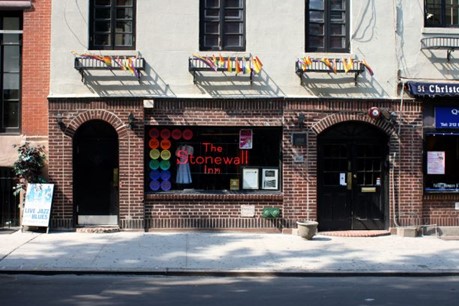
The Stonewall site was declared a National Monument by Presidential Proclamation. The Stonewall uprising is regarded by many as the most important catalyst for the dramatic expansion of the movement to outlaw discriminatory laws and practices against LGBTQI+ Americans.
Stonewall Inn Johannes Jordan/Wikimedia Commons
Today, LGBTQ Pride Month events attract millions of participants around the world and has grown to a month-long series of events such as parades, picnics, parties and concerts, including some great events to check out right here in Connecticut: https://ctvisit.com/articles/pride-month-celebrations-2024
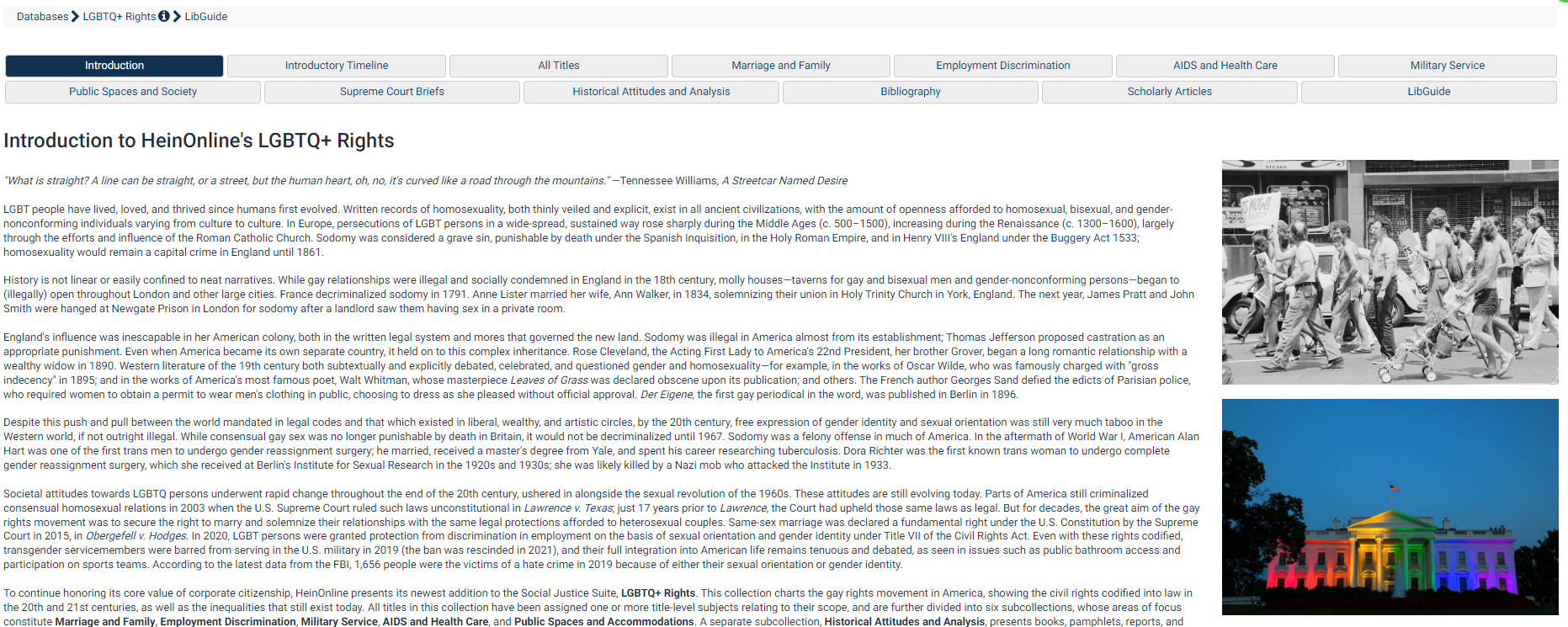
Many legal changes for the LGBTQI+ community have been made since the police raided the Stonewall Inn nearly fifty years ago. However, continuing LGBTQ+ civil and equality rights issues remain relevant today. HeinOnline features a LGBTQ+ Rights database. This collection charts the gay rights movement in America, showing the civil rights codified into law in the 20th and 21st centuries, as well as the inequalities that still exist today. To learn more about the newest database check out HeinOnline’s blog here and for additional research, check out UConn Law’s Research Guide, Sexuality, Gender Identity and the Law.
UConn Law Library will be closed Monday, May 26th, in observance of Memorial Day. Memorial day became a federal holiday in 1971 , and is intended to honor those who have died during the performance of their military duties. Connecticut General Statutes Section 1-4 designates the last Monday in May as Memorial Day or Decoration Day.
Memorial Day, originally known as Decoration Day, was first celebrated after the Civil War, to commemorate both the Confederate and Union soldiers who fought and died in the war. Over the years, as Decoration Day became Memorial Day, it came to include American military personnel who perished in all wars.
President Lyndon Johnson proclaimed Waterloo, New York as the Birthplace of Memorial Day. This proclamation noted that the patriotic tradition of observing Memorial Day began one hundred years ago in Waterloo, New York. Boalsburg, Pennsylvania also claims to have held the first observance, dating back to October 1864. Several other towns also declare they were the first to hold an observance.
Curious to see when exactly Connecticut first declared Decoration Day a legal holiday. I turned to HeinOnline’s Session Laws Library.
Narrowing the jurisdiction to Connecticut, I searched for “Decoration Day” in italics, and found the answer in the index: Decoration Day- Made a Legal Holiday. From here, I found the Public Act quickly after this search. The answer? 1874!
For more information on Memorial Day, check out this blog from In Custodia Legis from the Library of Congress, as well as this blog from UConn Today, Memorial Day and UConn: War and Peace Through the Decades showing a University of Connecticut’s connection to the holiday
Memorial Day is commemorated in many ways in Connecticut, ranging from community parades to backyard cook-outs, fireworks and formal ceremonies. No matter how you spend this day, remember those who’ve lost their lives to preserve our freedom. It bears mentioning that this blog and the freedom to publish it would likely not be possible without the sacrifices of those who died fighting for our country.
As this semester concludes, we want to pay tribute to our graduating library student employees! Sinead Brennan-Gatica, Farah Jean, Olivia Kaminski and Josh Maddox have been instrumental in keeping the library services running! They assist with faculty research and staff the desk on weekends, nights, and during finals. They assist students with course reserves, printing, scanning and library computers and are a terrific source of information about the library and law school. In the words of Anne Rajotte, Associate Director of Research, Instruction, and Scholarship:
Sinead and Olivia are a vital part of our student employee team. As our weekend workers, we would not have been able to be open Saturdays and Sundays without them. We will miss them!
Our Research Assistants work behind the scenes conducting legal research for the law school faculty members, greatly contributing to the research needs of the law school, law library and society as a whole. Tanya Johnson and Adam Mackie note the contribution Josh, Farah and Olivia have made to the law library:
Farah and Josh have been the backbone of our research assistant team for the past two years. Last May, we were also fortunate to have Olivia join us, and her contributions quickly became an integral part of our work. The quality of their efforts has enabled us to meet the research needs of our faculty, contributing to the reputation of the library and ultimately, UConn Law. We can’t thank them enough and wish them all the best with what comes next!
To all of our graduating 3L’s, thank you! We wish you all the best and hope you stay in touch as you embark upon your legal careers! We will miss you all!
UConn Law Library will be open extended hours during the exam period, December 6th – December 19th.
Exams can be stressful, check out some of our Wellness Resources at the Law Library, and do not hesitate to stop by with any questions about Study Aids, scheduling research consultations or just to chat! We are pulling for you all!
First observed nationally in 1877 to coincide with the centennial commemoration of the flag, the origins of Flag Day can be traced back to June 14, 1777, (available through the Journals of the Continental Congress, 1774-1789 available through UConn Law catalog via HeinOnline) when the Continental Congress adopted the Stars and Stripes as the official flag of the United States. Only Pennsylvania observes Flag day as a legal holiday, but there are many resources that discuss our Flag and this observance.
For those interested in a deeper dive about the law governing unofficial flags on town property and school property in Connecticut, check out the research report authored UConn Law Alumna Taylorann Vibert: Unofficial Flags on Town and School Property through the Office of Legislative Research in Connecticut.